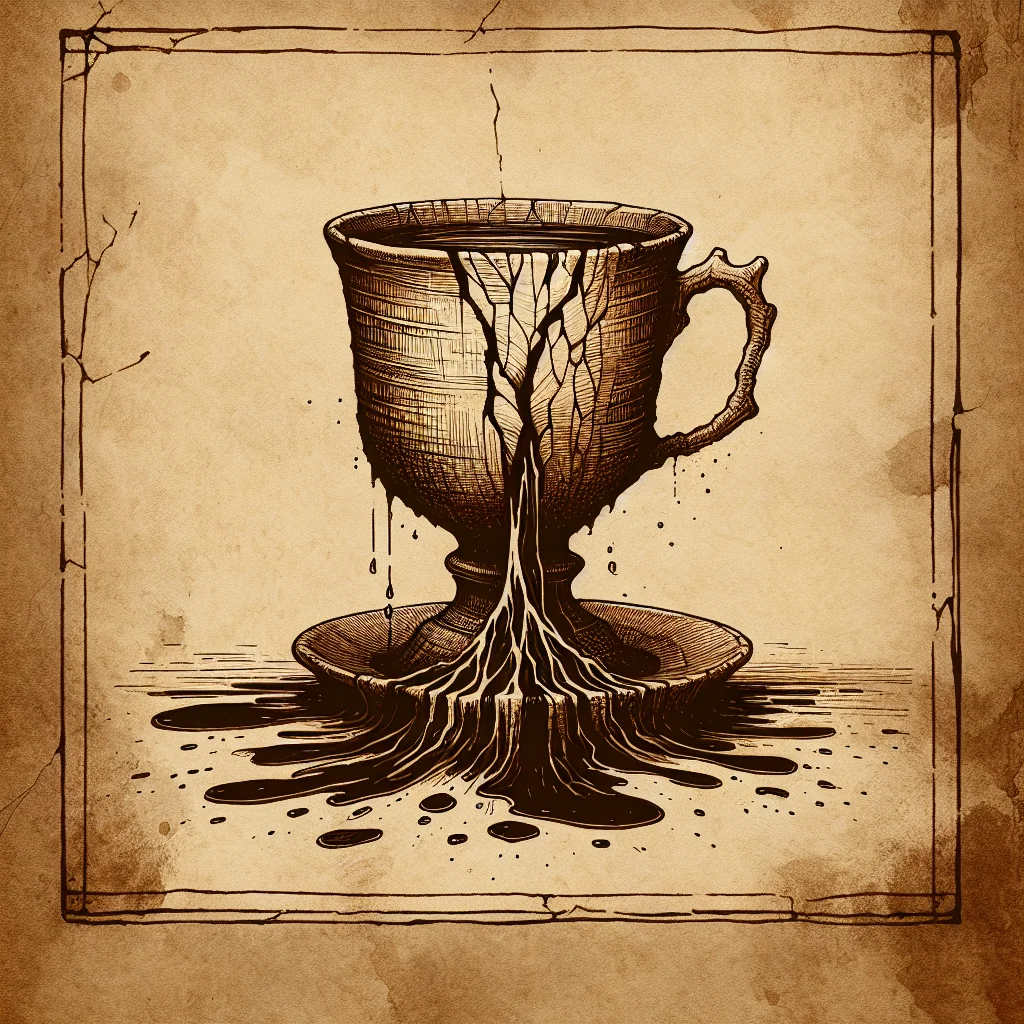
Chapter 2: The Cracks
THE SILENCE THAT followed Kote’s words was the silence before the first note of a song everyone in the room already knew would be unbearable.
The morning light came through the eastern windows in long, slanting bars, catching the dust and turning it to slow gold. It touched the red of Kote’s hair and found it dull. Copper gone to rust.
Outside, the day was grey and close. Not raining, but threatening it, the clouds pressed low against the hills. The trees along the road stood perfectly still. No wind. Not even the memory of wind.
Then Kote turned away. He lifted his hands from the bar, flexed his fingers once, and turned to the shelf behind him.
What followed was retreat disguised as routine. He wiped down the bar with a cloth folded into precise quarters. He checked the bottles on the shelf, turning each one so the labels faced outward. He washed the three glasses from the night before, though they had been washed already, setting each one upside down on the drying cloth with a small, definitive click.
Every motion measured. Every gesture complete. The innkeeper tending his inn the way a priest tends an altar long after the congregation has gone.
Chronicler watched, because something in Kote’s movements this morning was different. On the first morning, Kote’s routine had been armor. On the second morning, habit, the body moving through its patterns while the mind was already deep in the telling.
This morning it was something else. Slower. More careful. As though Kote were memorizing the weight of the cloth in his hand, the grain of the bar beneath his fingertips. A man walking through his house one final time before leaving it forever.
When he finished, Kote looked up and found Chronicler watching him.
“You’re eager,” Kote said. His voice held something that was almost amusement.
“I’m ready,” Chronicler said.
“There’s a difference?”
“One implies patience. The other implies a pen.” He held up the pen. “I have a pen.”
The corner of Kote’s mouth moved. Not a smile. The memory of a place where smiles had lived.
Bast made a sound, low and soft, that might have been a laugh in a brighter room. He was watching the windows now, tracking something Chronicler couldn’t see. The morning light caught his face at an angle, and for a moment the glamour thinned, the bones beneath rearranging into something sharper, stranger. Then he blinked and was just a young man again, restless on his stool.
“The last day,” Bast said. He said it the same as the last candle, or the last door. A thing that was running out.
“The last day,” Kote agreed.
The silence that followed had weight. The terrible weight of a thing that has been deferred and can be deferred no longer. The weight of a chest that must finally be opened. Of an ending that has been patient long enough.
Chronicler dipped his pen. The ink gleamed on the nib, dark as a promise.
Kote drew a breath. Let it out slowly. His hands found the bar again, palms flat, fingers spread, and Chronicler had the sudden sense that the man was drawing something up through the wood itself — strength or memory or simple stubbornness from the grain of the oak beneath his hands.
“Yesterday I told you about the cracks,” Kote said. “About coming back from Vintas and finding the world different. Finding myself different. The things the Cthaeh told me still in my head, changing the way I saw everything.”
“You did.”
“Today the cracks open.” His voice was quiet. Flat. “Today the cracks become the thing that breaks.”
Outside, the first drops of rain touched the windows. Not heavy. Not yet. Just a pattering, soft and irregular, the sound of something testing the glass before committing to the storm.
Bast’s hand found the edge of the bar and gripped it. The wood creaked.
“I should warn you,” Kote said, watching the rain on the glass. “The first two days, I told you about a young man making mistakes. Falling in love. Chasing the names of things.” He paused. “Today I tell you about what those mistakes cost. Not just me.”
He turned back to them. His eyes were dark and steady, and somewhere behind them, very deep, something that was not Kote and not quite Kvothe looked out at the room.
“Everyone,” he said.
Chronicler’s pen touched the page.
And Kote, slowly, like a man stepping off a cliff he has been standing on for years, began to speak.